Why Your Left and Right Palm Tell Different Stories
Noticed your left and right palm don't match? Here's what your dominant and non-dominant hand each reveal in palmistry, and why both matter.
Hold up both of your palms side by side and look closely. If you’ve never done this before, the difference can be startling — a life line that’s noticeably longer on one hand, a heart line with a different curve, a head line that forks on one side and runs straight on the other. Same person, two palms, and yet they don’t quite match.
This isn’t a flaw in palmistry, and it isn’t a sign that one hand is “wrong.” The difference between your two palms is actually one of the most information-rich aspects of a reading — it’s just rarely explained clearly to beginners encountering it for the first time.
Most introductory palmistry content focuses entirely on a single hand, which leaves people genuinely confused the first time they compare both and find real discrepancies. Once you understand what each hand is actually representing, though, the mismatch stops being confusing and starts being one of the most useful parts of the whole practice.
Why Your Two Palms Aren’t Identical
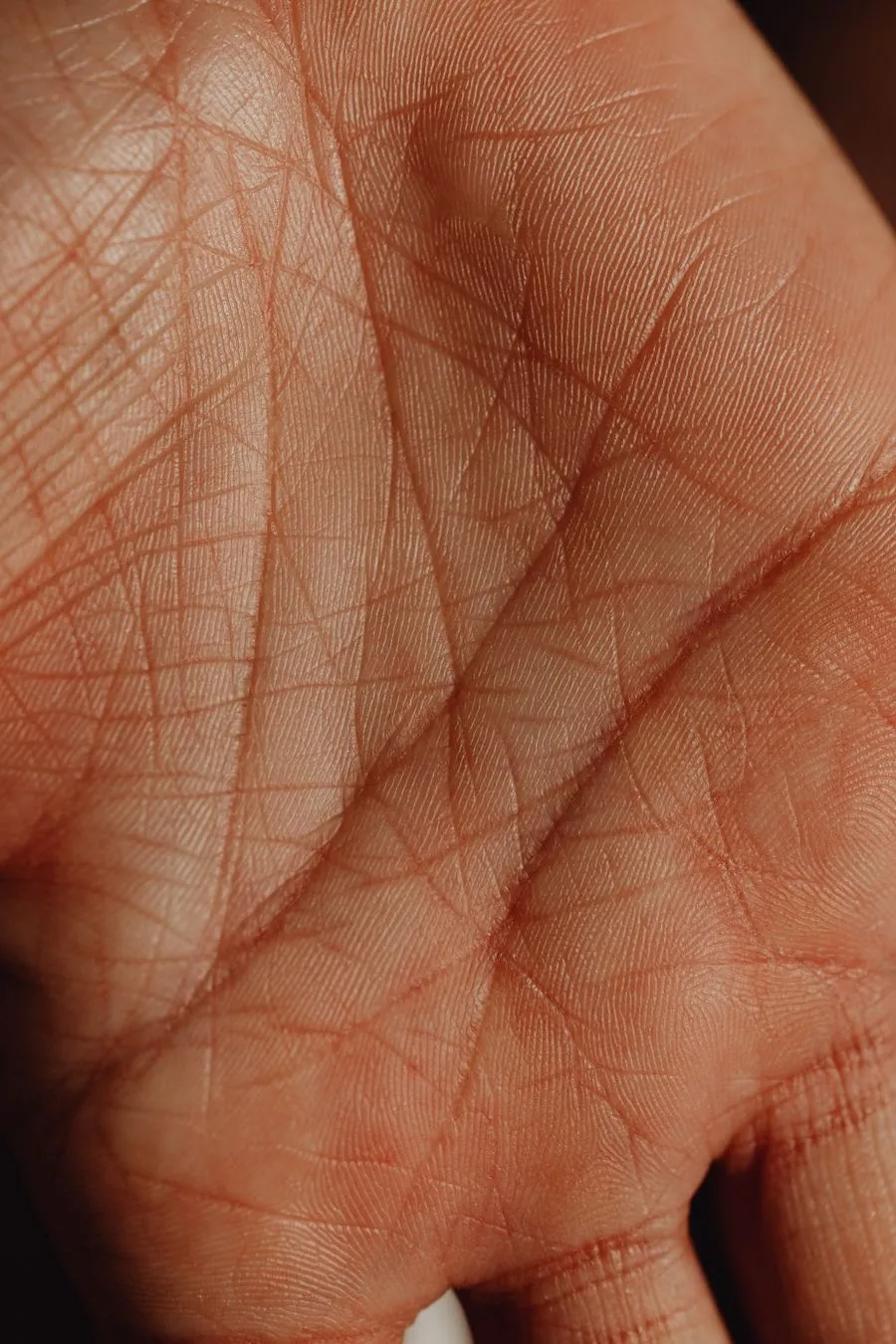
In most palmistry traditions, your non-dominant hand is read as the hand you were born with — your innate potential, natural tendencies, and starting point before life experience shaped anything. Your dominant hand, by contrast, is read as the hand you’ve made — the version of that potential that’s actually been lived out through your choices, habits, and circumstances.
This is why the two palms can diverge so much. They aren’t measuring the same thing twice; they’re comparing where you started to where you’ve ended up. A significant difference between them isn’t a contradiction — it’s the story of everything that’s happened in between.
The Non-Dominant Hand: What You Were Born With
The non-dominant hand is generally treated as the more fixed of the two — closer to a blueprint than a record. Lines here tend to represent natural inclination: an innate emotional temperament, a baseline capacity for resilience, tendencies you’d likely show even without any particular life experience shaping them.
Because this hand is less actively used for fine motor tasks over a lifetime, some practitioners also describe it as more resistant to change, holding something closer to your original nature.
This doesn’t mean the non-dominant hand is somehow more “true” or important than the other — only that it answers a different, earlier question. Think of it as the hand that shows what you had to work with, before any of your actual choices entered the picture.
The Dominant Hand: The Life You’re Actually Living
The dominant hand is read as more dynamic — reflecting choices made, effort exerted, and the accumulated effect of how you’ve actually lived rather than merely your starting potential. This is the hand most readers focus on when a reading is oriented toward the present or the recent past, since it’s considered more responsive to lived circumstance.
If you’ve gone through a major period of change — a career shift, a significant relationship, an illness or recovery, a big move — the dominant hand is generally where you’d expect that history to leave the clearest trace, even if the non-dominant hand looks largely unchanged from years earlier.
Why This Distinction Matters More Than It Seems
Without this framework, a difference between your two palms can feel confusing or even concerning — as if the reading contradicts itself. Understood correctly, it’s the opposite: the comparison between the two hands is often where the most specific, personal insight in a reading actually comes from, since it shows exactly where you’ve grown into, away from, or beyond your innate starting point.
This is also why an experienced reader will often ask about your life circumstances before comparing your two palms in detail — not because the hands can’t speak for themselves, but because knowing the context makes the specific differences far more legible than reading them cold.
Common Differences Between the Two Palms
A few patterns show up frequently when comparing dominant and non-dominant hands:
- A longer or more defined life line on the dominant hand. Often interpreted as a life that has actively built resilience or vitality beyond what was innately present.
- A straighter heart line on the non-dominant hand that curves more on the dominant hand. Suggesting emotional openness that’s been actively developed through lived relationships, rather than present from the start.
- A forked or broken head line on only one hand. Frequently read as a significant shift in thinking or decision-making that occurred at a specific point in life, visible only on the hand that reflects lived experience.
- Additional minor lines on the dominant hand not present on the other. Generally interpreted as experiences, especially formative ones, that have left a visible mark over time.
- A deeper or more prominent fate line on one hand only. Often read as a sense of direction or purpose that has become more defined through lived choices, rather than something you were simply born already knowing.
- Differences in the mounts (the fleshy areas beneath each finger). Development in one hand’s mounts relative to the other can suggest traits — ambition, creativity, discipline — that have been actively cultivated on one side of your life more than innately present on both.
- A distinct marking, like an M shape, star, or cross, present on only one hand. As covered in what these specific palm markings mean, the same marking can suggest something innate or something actively lived, purely based on which hand it appears on.
How to Read Both Palms Together
- Start with the non-dominant hand. Establish your baseline — the innate tendencies and starting potential — before comparing anything.
- Move to the dominant hand and note what’s different. Rather than reading it in isolation, actively compare each major line to its counterpart on the other palm.
- Pay attention to degree, not just presence. A line present on both hands but noticeably deeper or longer on one tells a more specific story than simply noting it exists.
- Ask what life experience might explain each difference. This is where a reading becomes personal rather than generic — connecting a specific palm difference to an actual chapter of your life.
- Don’t force a difference where there isn’t a meaningful one. Small natural variations between any two hands are normal and don’t always carry significance on their own.
When the Two Palms Tell Very Different Stories
It’s worth being clear: a large difference between your two palms isn’t a bad sign, and it doesn’t mean the reading is unreliable. If anything, a dramatic difference usually points to a life that has actively diverged from its starting conditions — through resilience, reinvention, healing, or simply a very different path than what your innate baseline alone would have predicted.
Conversely, palms that look nearly identical aren’t a sign of a wasted or uneventful life either. Some people’s lived experience genuinely tracks closely with their innate starting point, and that consistency is its own kind of story — one of steadiness rather than transformation.
This same idea — that where you started and where you’ve ended up can be genuinely different, without either being false — shows up elsewhere in how this site approaches self-understanding. It’s closely related to how your moon sign describes an inner emotional baseline that doesn’t always match the version of yourself you present outwardly. Both are ways of holding two true things about yourself at once, rather than needing to resolve them into a single, simpler story.
What This Means for How You Read Your Own Hands
The next time you compare your two palms, resist the instinct to look for which one is “correct.” Both are accurate, describing different things: one shows where you began, and the other shows what you’ve done with it. The gap between them, wherever it appears, is often the most honest part of the whole reading.
That gap tends to become more meaningful the more life you’ve lived. A teenager’s two palms may look nearly identical simply because there hasn’t been enough time for much divergence yet — while an older adult’s palms often show a far more pronounced difference, reflecting decades of accumulated choices layered on top of an original starting point.
For more on building a grounded, intuitive palmistry practice, visit the Palmistry hub, or explore what a soulmate really is for another way this site thinks about the difference between potential and lived experience.
Frequently Asked Questions
Which hand is the 'real' one — my dominant or non-dominant?
Neither is more real than the other. Your non-dominant hand reflects innate potential, and your dominant hand reflects how that potential has actually played out through your choices. Both are accurate; they're just answering different questions.
What if I'm ambidextrous?
Most palmistry traditions still recommend choosing the hand you write with, or use more often for detailed tasks, as your dominant hand for reading purposes, since fine motor dominance tends to matter more than overall handedness.
Can the two palms disagree so much that one seems wrong?
They can differ significantly without either being wrong. Large differences are usually the most interesting readings, since they point to specific ways you've diverged from — or lived out — your innate starting point.
Do lines actually change on the dominant hand over time?
Some readers do report subtle shifts in line depth or clarity over years, particularly in lines tied to life circumstances, though this isn't something you'll notice week to week. It's a long-arc phenomenon, not a static one.
Should a reading focus more on one hand than the other?
A complete reading considers both, but many readers begin with the non-dominant hand to establish a baseline before comparing it to the dominant hand's differences, which is where most of the useful, specific insight tends to live.