The M, the Star, and the Cross: What Palm Markings Mean
Noticed an M shape, a star, or a cross on your palm? Here's what each of these specific palm markings actually means in palmistry.
Beyond the three major lines most people learn first — heart, head, and life — the palm often carries smaller, more specific markings that get far less beginner-friendly explanation: a loose M shape formed where several lines cross, a small star-like mark near the base of a finger, a distinct cross somewhere on the palm’s surface.
These markings are genuinely meaningful in palmistry, but they’re also some of the most over-dramatized online, usually reduced to clickbait claims about wealth or fame. Here’s what each one actually represents.
The M Shape
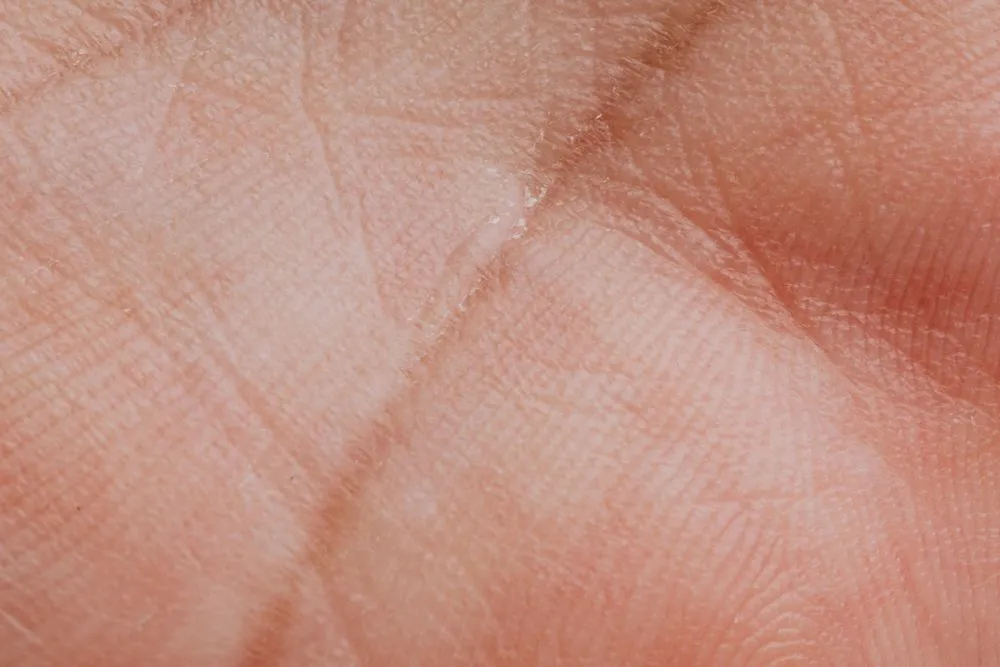
The M shape isn’t a fourth major line — it’s a pattern formed by the natural intersection of the head line, heart line, and life line, which on some palms visually resembles the letter M when viewed together. It’s one of the more commonly searched palm markings, often surrounded by exaggerated claims about destiny or fame.
In more grounded palmistry practice, a clearly formed M is generally associated with strong intuition and sound judgment — someone whose instincts and practical thinking tend to align rather than pull in different directions. It’s read as a supportive pattern rather than a singular prophecy about a specific life outcome.
The M forms because the head and heart lines both originate near the life line and travel in similar-enough directions that, on many palms, they naturally create this shape. That’s worth knowing precisely because it explains why the marking is so common — it isn’t a rare or exclusive sign, but a natural byproduct of how these three major lines are positioned on most hands.
Why the M Gets Overhyped Online
Because the M shape is easy to photograph and dramatize, it’s become a popular subject for viral claims that go well beyond what traditional palmistry actually attributes to it. Treat exaggerated claims about the M shape — particularly ones promising specific fame or fortune — with the same skepticism you’d apply to any oversimplified viral claim.
If anything, a clearly formed M is best understood as reassurance rather than prediction: a sign that your intuitive and logical faculties are generally working together well, which is a genuinely useful thing to know about yourself even without any grander claim attached to it.
The Star
A star-shaped marking — several short lines radiating from a central point — is typically found near the base of a finger or on one of the palm’s mounts (the fleshy areas beneath each finger). Unlike the M, which forms from major lines, a star is usually a smaller, more localized marking.
A star is generally read as a marker of sudden, significant achievement or recognition tied to whatever quality that area of the palm represents. A star beneath the index finger, for instance, is often associated with leadership or authority; one beneath the ring finger with creative or artistic recognition.
Unlike the M, which reflects an ongoing pattern, a star is more often read as pointing to a specific, notable moment rather than a continuous trait — closer to marking an event than describing a personality. This distinction matters when interpreting it: a star doesn’t describe who you are in general so much as something particular that happened, or is likely to happen, tied to that part of your life.
Why Location Matters More Than the Star Itself
The star’s meaning depends heavily on where it appears rather than existing as one fixed meaning across the whole palm. Two people with a star in different locations are, in effect, being told two different things — which is why beginner guides that describe “the meaning of a star” without specifying location are giving incomplete information.
Before interpreting a star, it’s worth taking a moment to identify which mount or area it actually sits on, using a basic palm map as reference if you’re not yet familiar with the different zones. This single step resolves most of the confusion beginners run into when trying to interpret a star on their own for the first time.
The Cross

A cross is a small marking formed by two intersecting lines, distinct from the palm’s major lines, often found between the heart and head lines or elsewhere on the palm’s surface. It has a reputation for being an ominous marking, which oversimplifies what it’s actually understood to represent.
A cross is generally read as marking a significant turning point, decision, or challenge — a moment that asked something real of you, for better or worse. It isn’t inherently negative; it’s more accurately described as a marker of consequence, a point where something genuinely mattered, rather than a warning of misfortune.
Much of the cross’s ominous reputation traces back to its resemblance to religious and folk-superstition imagery rather than anything specific to palmistry itself. Within the practice, a cross carries roughly the same emotional weight as a fork in the road — significant and worth noting, but not a verdict on whether what follows will be good or bad.
The Cross Between the Heart and Head Lines Specifically
A cross found specifically between these two major lines is sometimes given its own name and associated with a pivotal moment involving both emotional and practical decision-making at once — a choice that required weighing the heart and the head together rather than following one alone.
This particular placement tends to draw more attention from readers than a cross elsewhere on the palm, precisely because it sits at the intersection of two of the most emotionally significant major lines. A cross tucked away on a less prominent part of the palm carries the same general meaning but tends to be read as a quieter, more private turning point rather than one that reshaped major decisions.
How to Read These Markings Without Overreacting

- Confirm the marking is genuinely distinct, not just a skin crease. Palms have many incidental lines and folds; a marking worth reading should be reasonably clear and separate from ordinary skin texture.
- Note its exact location before interpreting it. As with the star, location changes meaning significantly for most of these markings.
- Check both hands. The same marking’s presence, absence, or difference in clarity between your dominant and non-dominant hand adds an additional layer, similar to how the two palms tell different stories more broadly.
- Resist treating any single marking as the entire reading. These markings add nuance to a reading built primarily on the major lines — they aren’t a replacement for that foundation.
- Be skeptical of absolute claims. Genuine palmistry describes tendencies and themes, not guaranteed outcomes; any source promising a specific, certain future based on one marking is overstating what the practice actually claims.
Why These Markings Matter Less Than the Major Lines
It’s worth keeping these three markings in perspective. They’re a meaningful layer of detail, but they’re additions to a reading, not its foundation. Someone with no distinct M, star, or cross on their palm at all isn’t missing anything significant — the bulk of what a reading actually reveals comes from the major lines and how the two palms compare to each other, which is exactly where to focus first as a beginner.
The Real Takeaway
An M, a star, or a cross can add real texture to a reading once the fundamentals are already in place — but none of them are a substitute for understanding the major lines first, and none of them deserve the dramatic, absolute claims they often attract online. Treat them as a closer, more specific layer of detail, worth noticing but not worth building an entire reading — or an entire belief about your future — around.
If you do find one of these three markings on your own palm, the most useful next step isn’t to search for a single definitive verdict, but to sit with it alongside everything else you already know about your major lines and your two-hand comparison — letting the smaller marking add nuance to a picture you’ve already started building, rather than treating it as a standalone answer.
For more grounded palmistry guidance, visit the Palmistry hub.
Frequently Asked Questions
Do I need a perfect, clearly formed M to count, or does a rough approximation still apply?
A rough approximation is fine. Most palms show an imperfect M formed loosely by the natural crossing of the head, heart, and life lines, and it's this general shape — not a textbook-perfect letter — that carries the traditional meaning.
Can I have more than one of these markings at once?
Yes, and it's fairly common. Having an M shape and a small star elsewhere on the same palm doesn't cancel either meaning out — each marking is generally read on its own, in its own location.
Do these markings mean the same thing on both hands?
The marking's core meaning stays the same, but its context shifts depending on which hand it's on — appearing on the non-dominant hand suggests an innate trait, while the same marking on the dominant hand suggests something more actively developed or lived out.
Is a cross always a warning sign?
No — a cross is generally read as marking a significant turning point or challenge, not inherently negative. Many readers describe crosses as moments that demanded something of you, which is different from being an omen of misfortune.
What if I can't find any of these three markings on my palm at all?
That's completely normal. Not every palm has a clear M, star, or cross, and their absence doesn't mean anything is missing from your reading — most of the meaningful information in palmistry comes from the major lines themselves, not from these additional markings.