What 'Attachment' Really Means in Buddhism
Buddhism says attachment causes suffering, but it doesn't mean what most people assume. Here's what attachment actually refers to, and what it doesn't.
“Attachment causes suffering” is one of the most quoted lines associated with Buddhism, and also one of the most consistently misunderstood. Taken at face value, it sounds like an instruction to stop caring — about people, about outcomes, about anything you might lose. That reading has understandably put plenty of people off exploring Buddhist thought further, since it seems to ask for something that feels neither possible nor genuinely desirable.
That reading is also a significant misunderstanding of what the term actually refers to. Once the actual meaning is clear, the teaching becomes far more livable — and, for most people, far more useful — than the flattened version that circulates in casual conversation.
What Attachment Actually Means
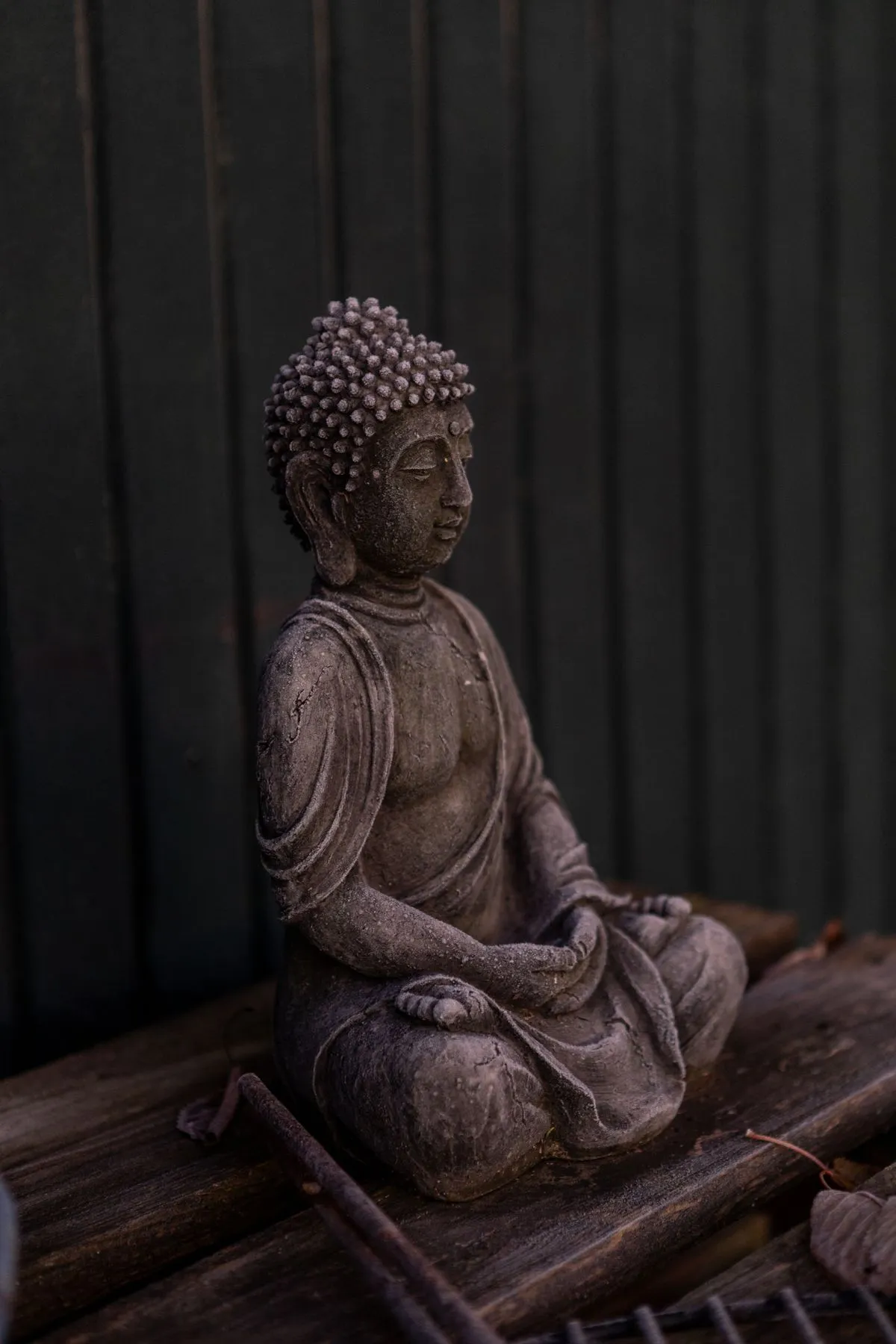
In Buddhist teaching, attachment (often rendered from the Pali/Sanskrit term upādāna) doesn’t refer to love, connection, or care in the ordinary sense of those words. It refers more specifically to clinging — an insistence that a particular person, outcome, or experience must remain exactly as it is, driven by an underlying resistance to change and impermanence.
The suffering in question doesn’t come from loving someone or wanting things to go well. It comes from the mental grip that treats “this must stay this way” as a condition for your own peace of mind — a grip that inevitably meets reality’s tendency to change, whether you’re ready for it or not.
This teaching sits alongside a broader idea in Buddhist thought about impermanence — the observation that everything, without exception, is in a constant state of change. Attachment, in this light, isn’t really about the object of your care at all. It’s about a mismatch between how you’re relating to something and how that something actually behaves in reality, which is to say: it changes, no matter how much you’d prefer it didn’t.
The Difference Between Love and Clinging
This distinction matters enormously, because it changes the entire meaning of the teaching. Love, in most Buddhist frameworks, isn’t discouraged — many traditions place enormous emphasis on compassion and connection as central practices, not obstacles to be overcome.
What Actually Gets Identified as the Problem
The issue isn’t the love itself; it’s the added layer of clinging that often rides alongside it — the fear-driven insistence that the person, relationship, or circumstance must never change, must never end, must go exactly the way you need it to. That insistence is what creates suffering, specifically because it sets you up in an unwinnable argument with reality, which changes regardless of how tightly you hold on.
You can test this distinction against your own experience: love that isn’t laced with clinging tends to feel expansive, even when it’s intense — a fullness rather than a tightness. Clinging, by contrast, usually carries an undertone of anxiety or urgency, a need to secure or control something that hasn’t actually been threatened yet. The feeling itself is often a more reliable guide than any abstract definition.
Why This Confusion Happens So Often
Part of the confusion comes from translation — English doesn’t have a clean equivalent for the specific concept being described, so “attachment” gets used as shorthand, carrying all of its everyday emotional connotations along with it. In everyday English, “attachment” often just means love or bonding, which makes the teaching sound like it’s condemning something it isn’t actually targeting.
The other part of the confusion comes from how the idea circulates in secondhand wellness content, often stripped of the nuance present in the original teaching and flattened into a much simpler (and much less accurate) “don’t get attached to anything” soundbite.
This flattening tends to happen to a lot of contemplative concepts once they travel far from their original context — a nuanced, centuries-old teaching gets compressed into something that fits neatly on a social media graphic, losing most of what made it useful in the first place. Attachment is far from the only Buddhist concept to suffer this fate, but it may be one of the most consequential, since it directly shapes how people relate to the people they love.
What Non-Attachment Looks Like in Practice

Non-attachment, practiced accurately, tends to look less like emotional distance and more like full engagement paired with acceptance:
- Fully showing up for a relationship or experience, without demanding a guaranteed outcome. You invest completely, while holding the outcome itself more loosely.
- Feeling loss fully when it comes, rather than resisting it. Grief and non-attachment aren’t in conflict — resisting the reality of loss is what non-attachment addresses, not the grief itself.
- Noticing the specific thought “this must not change” when it arises. That thought, rather than the underlying care, is generally what the practice is trying to loosen.
- Returning attention to what’s actually happening now, rather than an imagined fixed future. Clinging often lives in an idea of how things should stay, more than in the present reality itself.
- Practicing with small things before applying it to what matters most. Noticing your grip on minor daily frustrations — a delayed train, a changed plan — builds the same muscle you’ll eventually rely on for the losses and changes that matter far more.
A Simple Way to Recognize Clinging in Yourself
A useful test: notice when your peace of mind depends entirely on a specific, uncontrollable outcome going exactly one way. That dependency — not the underlying wish itself — is usually where clinging is showing up. Wanting a good outcome is natural; needing it as a condition for your own steadiness is where the teaching says suffering tends to take root.
Another practical signal is how you respond to the mere possibility of change, before anything has actually happened. If imagining a relationship ending, a job changing, or a plan falling through produces disproportionate dread compared to the actual likelihood of it happening, that gap is often where clinging is quietly operating in the background, coloring your present peace of mind with a future that hasn’t occurred.

This same idea shows up in how spiritual awakening often feels like a crisis before it feels like peace: the discomfort of that period often comes from clinging to an old identity or belief that’s no longer serving you, resisting its natural loosening rather than allowing the change already underway.
Why the Lotus Is Used as a Symbol Here
The lotus is one of Buddhism’s most recognizable symbols precisely because of how it grows: rooted in mud, rising through murky water, blooming clean above the surface. It’s often read as a metaphor for exactly this teaching — full engagement with a messy, ever-changing world, without needing that world to be other than what it is in order to bloom.
The Bigger Picture
“Attachment causes suffering” isn’t an instruction to love less or care less. It’s a much more specific observation about the particular kind of suffering that comes from insisting reality hold still — and an invitation to engage just as fully with your life while loosening that insistence, one moment at a time.
If you take one thing from this teaching, let it be permission to stop treating “letting go” as the opposite of love. In practice, the two tend to deepen each other — the less you need a relationship or outcome to look a specific way, the more fully you’re able to actually be present for what it really is, moment to moment, rather than defending an idea of what it should be.
This same loosening is often what’s actually happening on the cushion when tears arrive unexpectedly during meditation — a small, physical instance of clinging finally releasing its grip.
For more on navigating inner change and spiritual growth, visit the Spirituality hub.
Frequently Asked Questions
Does Buddhism say I shouldn't love my family or partner?
No. Buddhism generally distinguishes between love and connection, which are encouraged, and attachment in the specific sense of clinging driven by fear of loss or a need to control outcomes, which is what's identified as a source of suffering.
Isn't wanting things to go well just normal, though?
Yes, and Buddhism doesn't ask you to stop wanting things or caring about outcomes. The distinction is between caring and clinging — engaging fully with your life while holding outcomes loosely enough that they don't determine your peace of mind.
How is non-attachment different from not caring at all?
Non-attachment is often confused with indifference, but it's closer to the opposite. It's caring deeply about something while accepting that you can't control its outcome — which usually requires more emotional engagement, not less, than genuine indifference would.
Can you practice non-attachment and still grieve a loss deeply?
Yes. Grief is a natural response to loss and isn't in conflict with non-attachment. What non-attachment addresses is the underlying resistance to the reality of change and loss, not the emotional experience of it.
Is non-attachment something you either have or don't have?
No — it's generally described as a practice and a gradual shift in relationship to experience, not a fixed trait or a switch you flip. Most practitioners describe working with it over years, not achieving it once and being done.