Why You Suddenly Cry During Meditation (And What It Means)
Crying during meditation, seemingly out of nowhere, is more common than you'd think. Here's what's actually happening and how to respond to it.
You sit down to meditate, settle into your breath, and somewhere in the stillness, tears start — often without any specific thought or memory attached to them. No obvious trigger, no story playing in your mind, just an unexpected wave of emotion arriving from what feels like nowhere. If this has happened to you, it can feel disorienting, even a little embarrassing, especially if it happens in a group setting.
It’s also far more common than most people realize, and it isn’t a sign that anything has gone wrong.
Meditation teachers who lead group sessions regularly report seeing this happen to students, often to the visible relief of the person it’s happening to once they realize they’re not the only one. It’s simply rarely discussed openly beforehand, which leaves people feeling caught off guard the first time it happens to them.
Why This Happens So Often
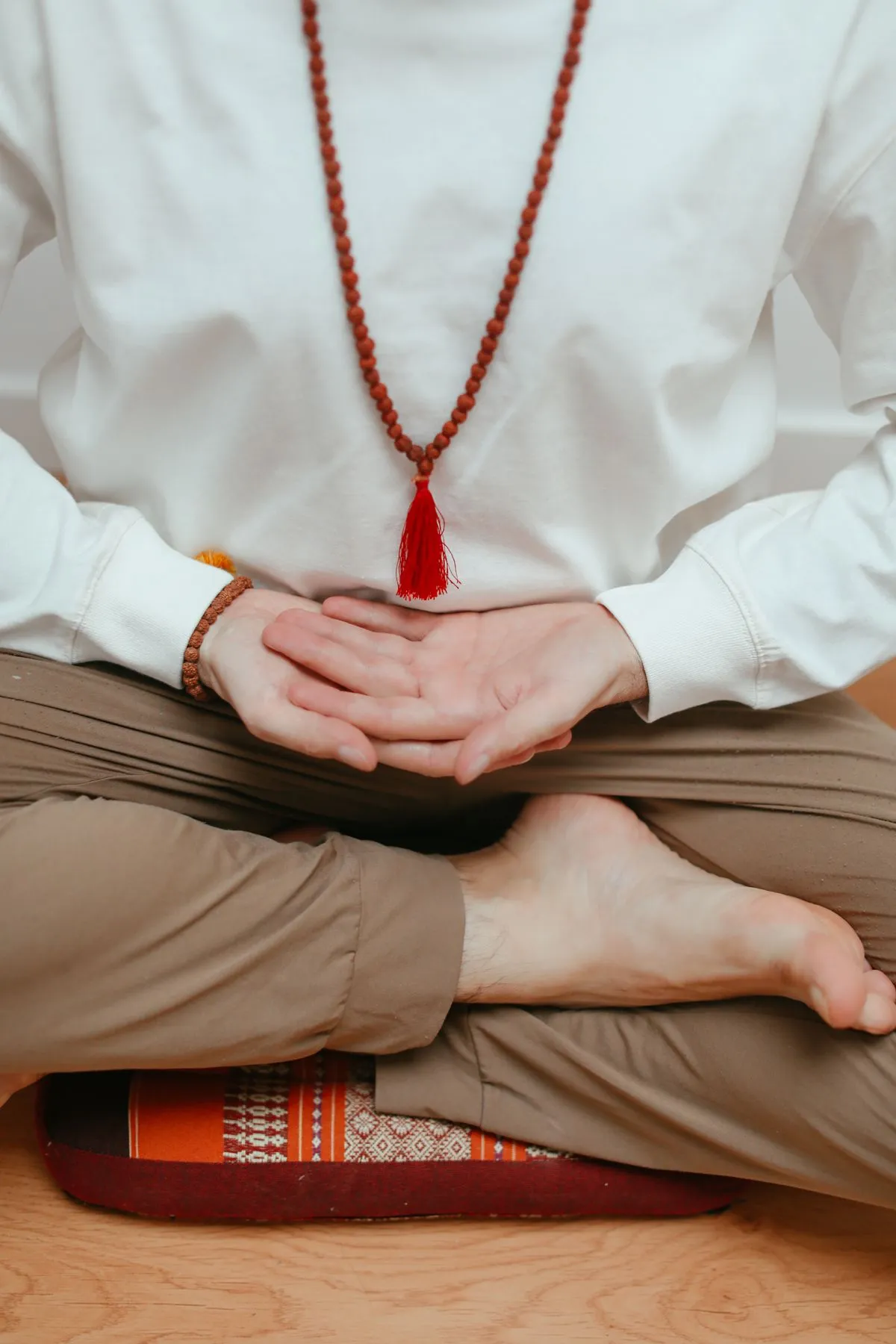
Daily life is full of built-in distractions that quietly keep emotional processing at bay — conversation, screens, tasks, noise. Meditation removes most of that scaffolding, often for the first extended period of true stillness someone has experienced in a long time. Emotion that’s been suppressed or simply unattended to, sometimes for months or years, finally has room to surface once the usual distractions fall away.
This isn’t meditation causing an emotional problem. It’s meditation revealing one that was already there, quietly held beneath the surface of ordinary busyness.
This is part of why meditation can initially feel harder, not easier, for people going through a genuinely difficult period. The stillness isn’t creating the difficulty — it’s simply removing the noise that had been keeping it at a comfortable distance. Understanding this in advance can make the experience considerably less alarming when it does happen.
Why It Often Feels Like It Comes From Nowhere
The absence of an obvious trigger is actually consistent with how this tends to work. Because meditation strips away the usual narrative and distraction, what surfaces is often the emotion itself, without the specific story that originally caused it — you feel the grief, or the fear, or the relief, without necessarily reliving the memory attached to it.
Why This Is Actually a Useful Sign
Emotion arriving without a clear story attached often means you’re accessing something more fundamental than a single memory — a general emotional undercurrent that’s been present for a while, rather than a reaction to one specific event. That’s frequently a sign of real depth in the practice, not a distraction from it.
It can also relate directly to what “attachment” actually means in Buddhism — much of what surfaces in these moments is the felt experience of clinging or resistance itself, arriving before the mind has had a chance to construct a specific narrative to explain it. Feeling the resistance directly, without the story wrapped around it, is often closer to the raw material the practice is actually working with.
What to Do When It Happens
- Let it happen rather than fighting it. Trying to suppress tears to preserve a “proper,” composed meditation session usually just adds a second layer of tension on top of the first.
- Stay with your breath as an anchor, not an escape. You don’t need to stop meditating when this happens — continuing to breathe steadily while the emotion moves through you is often exactly the practice.
- Resist immediately analyzing it. The urge to figure out exactly what the tears are “about” can pull you out of the felt experience and back into your head. It’s fine to reflect afterward, once the wave has passed.
- Give yourself time afterward before returning to ordinary activity. Moving straight from an emotional release into a demanding task can feel jarring; a few extra quiet minutes helps the transition.
- Keep a simple note of when this happens. Over time, patterns may emerge — certain times of day, certain types of practice, certain life periods — that offer useful context.
- Avoid making it a performance, even privately. There’s no need to dramatize or suppress the release for anyone’s benefit, including your own internal narrative about what a “good” meditation session should look like. Simply let it be what it is.
If you’re meditating in a group setting when this happens, it’s worth remembering that most experienced practitioners and teachers have seen this many times before and won’t find it unusual or disruptive, even if it feels intensely personal to you in the moment.
Why This Tends to Ease Over Time

For most people, this kind of unexpected release happens most intensely in the early months of a consistent meditation practice, when there’s often a significant backlog of unattended emotion to move through. As that backlog clears, the intensity generally softens, though it can still resurface occasionally during particularly demanding periods of life.
It’s worth thinking of this less like a problem to be solved and more like a debt being gradually paid down. Each release, even an uncomfortable one, moves you slightly further along, rather than being a setback in an otherwise linear progression toward calm. Expecting the tears to disappear entirely and permanently within a few weeks tends to set up unrealistic expectations that make the natural ebb and flow of this process feel more discouraging than it needs to.
This mirrors the broader pattern covered in why spiritual awakening often feels like a crisis before it feels like peace — an intense, sometimes uncomfortable release phase that tends to precede a steadier, calmer relationship with your own inner life, rather than persisting indefinitely.
When It’s Worth Bringing in Additional Support
It’s worth being clear that meditation is not a substitute for mental health treatment, particularly if what surfaces feels connected to significant trauma, or if the emotion doesn’t ease with time and instead becomes overwhelming or persistent. In those cases, working with a therapist alongside your meditation practice — rather than relying on meditation alone — tends to produce much better, safer outcomes.
Meditation can be an excellent complement to therapeutic work, surfacing material that’s genuinely useful to bring into a session, but it isn’t designed to process serious trauma on its own, and it shouldn’t be asked to.
A useful guideline: if what surfaces feels like it’s moving through you, even if uncomfortably, that’s generally within the range of what an ordinary meditation practice can hold. If it instead feels like it’s overwhelming you, retraumatizing you, or leaving you less able to function afterward rather than more settled, that’s a clear signal to bring in professional support rather than continuing to sit with it alone.
What This Experience Is Actually Telling You

Rather than a malfunction or a distraction from “real” meditation, unexpected tears are often one of the clearest signs that the practice is working exactly as intended — creating enough stillness for something honest to surface, rather than staying buried under the noise of an ordinary day. Treated with patience rather than alarm, it tends to be one of the more genuinely useful parts of building a consistent practice, not an obstacle to it.
The next time it happens, try meeting it with curiosity instead of concern. You’re not failing at stillness — you’re finally still enough for something real to reach the surface, which is, in its own way, exactly what you sat down to find.
For more on navigating the emotional side of spiritual practice, visit the Spirituality hub.
Frequently Asked Questions
Is it normal to cry during meditation with no clear reason?
Yes, it's a commonly reported experience, especially for people who are new to sitting quietly with themselves for extended periods without the usual distractions of daily life.
Does crying during meditation mean I'm doing it wrong?
No — there's no version of meditation where crying counts as a failure. If anything, it usually means the stillness is doing exactly what it's meant to do: creating enough quiet for something real to surface.
Should I try to stop crying and get back to 'proper' meditation?
Generally, no. Most teachers recommend allowing the emotion to move through you rather than suppressing it to return to a calmer-looking practice. The crying is part of the process, not a detour from it.
What if this happens every single time I meditate?
This is worth noting rather than worrying about. It may simply mean you're carrying a significant backlog of unprocessed emotion that meditation is giving you consistent access to — which is useful information, not a problem to fix quickly.
When should I seek additional support rather than just continuing to meditate through it?
If the emotion feels overwhelming, doesn't ease with time, or is tied to trauma that feels too large to process alone, it's worth bringing a therapist into the process alongside your meditation practice, rather than working through it in isolation.