Why Two People With the Same Zodiac Sign Can Be So Different
Two Leos, nothing alike. Here's why sharing a zodiac sign doesn't mean sharing a personality, and what actually shapes the difference.
You’ve met another Leo, or another Gemini, or whatever your own sign happens to be — and they were nothing like you. Not a little different. Genuinely, noticeably different, in ways that made you wonder whether one of you was reading the wrong horoscope. If sun signs are supposed to describe personality, how can two people who share one seem to have so little in common?
The short answer: your sun sign was never meant to carry that much weight on its own. It’s one placement in a much larger, more individual chart — and the rest of that chart is doing most of the work in making you, specifically, who you are.
Why Sun Sign Isn’t the Whole Picture
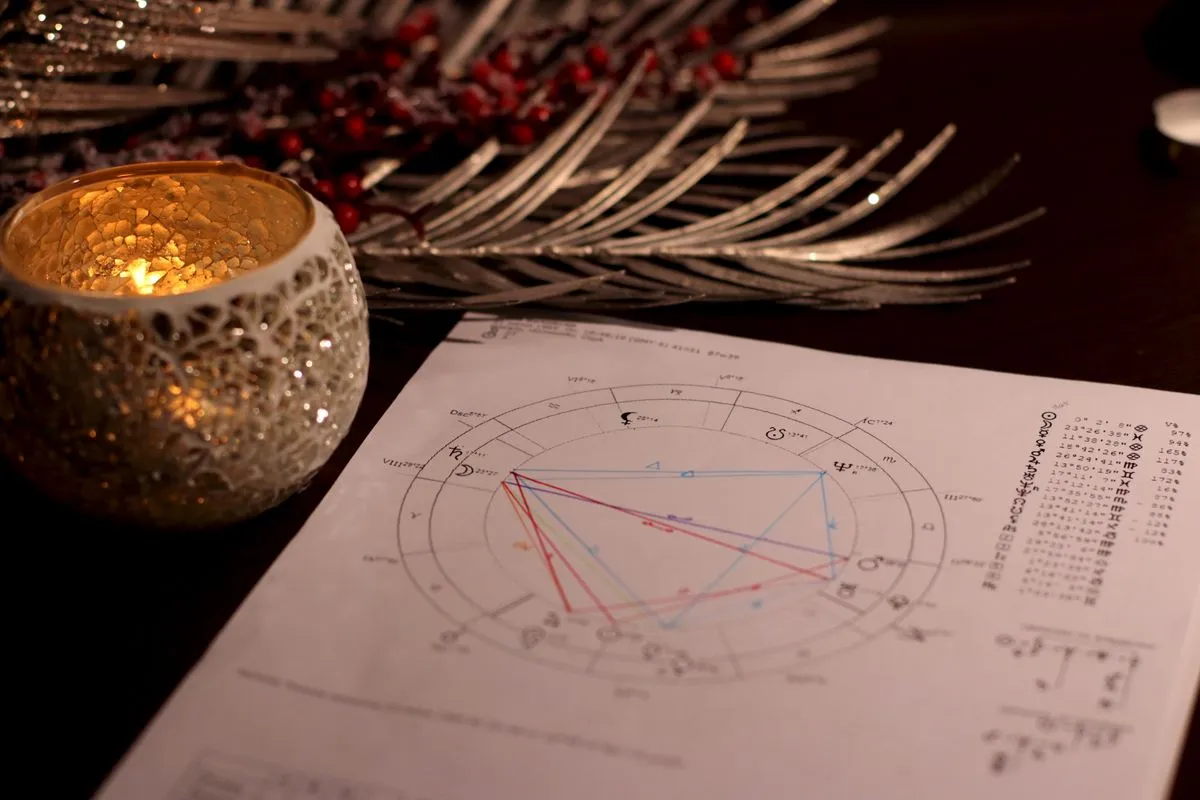
A sun sign describes one placement — where the sun was positioned at your birth — out of dozens that make up a full astrological chart. It’s the most widely known placement because it’s the easiest to calculate (all you need is a birth date), which is exactly why it became the basis for mainstream horoscopes. But easy to calculate isn’t the same as complete.
A full birth chart also includes your moon sign, rising sign, and the placements of Venus, Mars, Mercury, and every other planet at the moment of your birth — each contributing its own layer to the overall picture. Two people can share a sun sign while having almost nothing else in common across the rest of their chart.
Mainstream horoscopes lean on the sun sign specifically because it’s the only placement simple enough to summarize for an entire audience at once. A newspaper horoscope can’t ask for your birth time and location, so it defaults to the one data point everyone already knows — which makes it convenient, but never a full read of anyone’s actual chart.
The Role of Your Full Birth Chart
Your moon sign, as covered in what your moon sign reveals, shapes your emotional instincts and inner world — often far more noticeably, day to day, than your sun sign does. Your rising sign shapes how you come across to others on first impression. Your Venus sign shapes how you approach love and attraction. Each of these can land in a completely different sign than your sun, and each pulls your overall personality in its own direction.
Two people can both be Leos by sun sign while one has a Cancer moon and Virgo rising, and the other has an Aries moon and Sagittarius rising. On paper, they share exactly one placement out of many — which goes a long way toward explaining why they might feel like they have almost nothing in common when they meet.
Why This Explains So Much
Once you consider that a full chart involves this many placements, each with twelve possible signs, the odds of two people sharing an identical chart — even down to just the major placements — become vanishingly small. Sharing a sun sign with someone is closer to sharing a single sentence from a much longer book than sharing the whole story.
Why Even Identical Charts Would Still Differ
It’s worth being honest about a further layer here: even two people with genuinely identical charts, down to every placement, would still turn out differently, because a chart describes tendencies and raw material, not a fixed script. Upbringing, culture, individual choices, and lived experience all shape how any given placement actually expresses itself in a real life.
This is similar to the reasoning covered in why your two palms tell different stories — a starting point (a sign, a palm) isn’t the same as the finished result. What you do with that starting point over a lifetime matters as much as, if not more than, the starting point itself.
Astrology at its most thoughtful has always acknowledged this. A chart is generally described as showing tendencies, inclinations, and raw material — not a deterministic script that removes any role for personal agency. Two people can be handed a similar set of astrological raw materials and build genuinely different lives out of them, in the same way two builders given identical materials can construct very different houses.
What’s Actually Shared Between Same-Sign People
None of this means sun signs are meaningless. People who share a sun sign genuinely do tend to share certain underlying themes, even when their day-to-day personalities look completely different:
- A similar core motivation, expressed differently. Two Leos might both be driven by a need for recognition, even if one seeks it through leadership and the other through creative work.
- Similar areas of challenge, even with different responses. Shared sun sign “weaknesses” often show up as the same underlying tension, handled in very different ways by different individuals.
- A recognizable resonance once you look past surface behavior. People who share a sun sign often report feeling an odd, familiar recognition in each other’s underlying values, even when their personalities on the surface don’t match at all.
- A shared relationship to the same core question. Every sun sign is often described as centering around one core life question or tension — for Libra, balance; for Scorpio, transformation; for Capricorn, structure. Two people of the same sign are usually wrestling with the same underlying question, even while arriving at very different answers.
How to Read Your Own Sign More Personally
- Get your full birth chart, not just your sun sign. You’ll need your birth date, time, and location — free chart calculators online can generate this in seconds. If you don’t know your exact birth time, most calculators can still generate a reasonably useful chart, though your rising sign specifically may be less precise.
- Identify your moon and rising signs first. These two placements, alongside your sun, tend to explain the largest share of how your personality actually presents day to day.
- Look at your Venus and Mars placements for relationship and drive patterns. These often explain aspects of your personality that a sun-sign-only horoscope completely misses.
- Notice where your placements agree and where they pull in different directions. Internal tension between placements (a bold sun with a cautious moon, for instance) often explains inner contradictions you’ve always felt but never quite named.
- Hold your sun sign as a starting theme, not a complete description. Use it as one lens among several, rather than the entire picture.
When Someone Doesn’t Match Their Sign at All
If you’ve met someone who seems to defy their sun sign entirely, it’s worth remembering that a full chart, plus lived experience, can push someone quite far from their sun sign’s general description without the placement itself being “wrong.” A quiet, private Leo isn’t an exception to astrology — they’re simply a Leo whose moon, rising, and life experience have shaped the sun’s themes into a much quieter expression than the stereotype suggests.
This reframing tends to resolve a lot of the skepticism people bring to astrology in the first place. The complaint “I don’t relate to my sign at all” is usually true and, at the same time, not actually evidence against astrology — it’s evidence that a single placement was never going to capture a whole person to begin with.
The next time you meet someone who shares your sign but seems nothing like you, it’s worth treating that difference as an invitation rather than a contradiction — a chance to look past the shared label and notice what’s actually distinct about each of you underneath it. It’s often a far more interesting conversation than confirming a stereotype ever would be.
This same logic applies just as strongly to romance — see what your Venus sign reveals about how you love for a specific example of a placement that shapes you well beyond what your sun sign alone could explain.
For more ways to understand what actually shapes your personality beyond your sun sign, visit the Zodiac hub.
Frequently Asked Questions
If sun signs don't determine personality on their own, why do horoscopes work at all?
Sun sign horoscopes describe broad, general tendencies that apply loosely across everyone born under that sign, similar to how a general statement about extroverts might resonate without capturing everything about any one extroverted person. They're a starting sketch, not a complete picture.
Does this mean sun sign compatibility is meaningless?
Not meaningless, but incomplete on its own. Two people's sun sign compatibility is one data point among many in a full compatibility picture, which also depends heavily on moon signs, Venus signs, and other placements unique to each person's chart.
Can twins born minutes apart have meaningfully different charts?
Yes, especially for placements that shift quickly, like the rising sign, which can change within just a couple of hours. Even close-in-time births can result in noticeably different overall charts once every placement is considered.
Is it possible to feel nothing like your sun sign at all?
Yes, and it's common. If your moon, rising, or other placements are in very different signs from your sun, you may feel much more shaped by those placements day to day than by your sun sign's typical description.
What's the fastest way to understand why I don't relate to my sun sign?
Look up your full birth chart, not just your sun sign, using your birth date, time, and location. Comparing your moon and rising signs to your sun sign usually explains the gap immediately.