Why Your Front Door Color Matters More Than You Think (Feng Shui)
Your front door color isn't just curb appeal. Here's what red, black, green, and other front door colors mean in feng shui, and how to choose yours.
Walk down almost any street and you’ll notice most front doors cluster around the same handful of colors — white, black, natural wood tones, maybe a cautious navy. Red doors, when you do see one, tend to stand out enough that people notice and remark on them. That’s not an accident of trend cycles alone. Front door color has carried specific symbolic weight in feng shui for a very long time, and it’s one of the more accessible pieces of feng shui guidance, since it doesn’t require rearranging anything indoors.
If you’re choosing a color for a front door — or wondering whether the one you already have is working for or against you — here’s what the tradition actually says, and how to apply it without overhauling your entryway.
This applies whether you’re painting a door from scratch, second-guessing a color you inherited from a previous owner, or simply curious what your existing choice happens to mean.
Why the Front Door Specifically
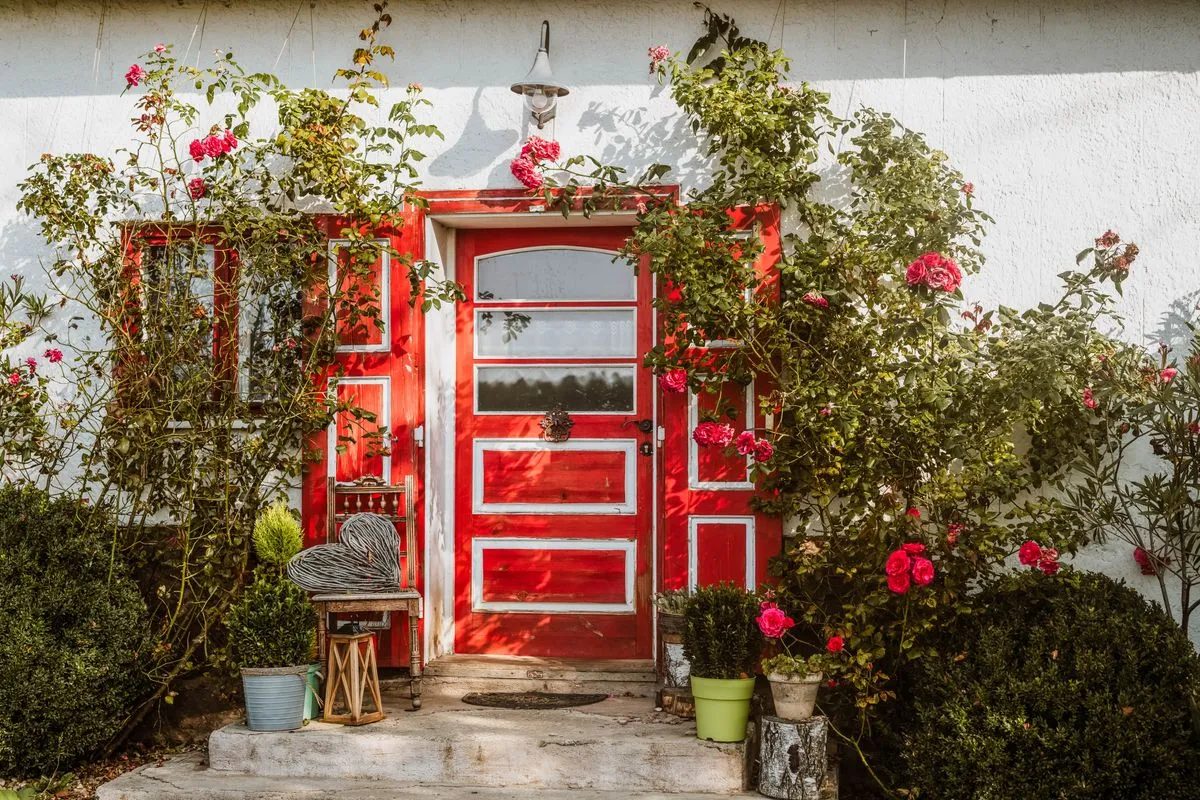
In feng shui, the front door is described as the “mouth of chi” — the primary point through which energy enters a home. Every other feng shui adjustment inside a house is considered secondary to what happens at this single entry point, since it’s the threshold everything else has to pass through first.
Color at this threshold isn’t treated as decoration. It’s treated as a filter — either supporting or working against the kind of energy a household wants to invite in. That’s why front door color gets far more specific guidance than, say, the color of an interior hallway.
This is also why front door guidance tends to be the first thing a feng shui practitioner addresses when evaluating a home, even before looking at bedroom layouts or interior furniture placement. Whatever else is happening inside a house, the entrance is treated as the foundation everything else builds on.
Color and Compass Direction: The Real Starting Point
The detail most front-door color guides skip is that the “correct” color isn’t fixed — it depends on which compass direction your door faces. Feng shui organizes colors around five elements (wood, fire, earth, metal, water), and each element is associated with specific directions and specific colors.
- South-facing doors pair well with red, orange, or pink tones (fire element).
- North-facing doors pair well with black, navy, or deep blue tones (water element).
- East and southeast-facing doors pair well with green or brown tones (wood element).
- West and northwest-facing doors pair well with white, gray, or metallic tones (metal element).
- Southwest and northeast-facing doors pair well with earthy yellows, terracotta, or beige tones (earth element).
Finding Your Door’s Direction
You don’t need specialized equipment for this — a basic compass app on a smartphone works fine. Stand with your back to the closed door, facing outward, and note the direction you’re facing. That’s the direction your door “faces” for feng shui purposes.
If your reading falls close to a boundary between two directions (say, right between south and southeast), it’s worth taking the measurement a few times to be sure, since the element and color recommendation can shift meaningfully at that edge. When in doubt, many practitioners default to the more universally auspicious choice — red — rather than agonizing over an ambiguous few degrees.
What Each Common Front Door Color Means
Beyond the directional element pairing, most front door colors carry their own general symbolic meaning worth knowing, regardless of exact compass alignment.
Red is the color most associated with luck, protection, and vitality in feng shui, and it’s the most commonly recommended color across different schools of practice when in doubt. It’s considered especially auspicious for a main entrance.
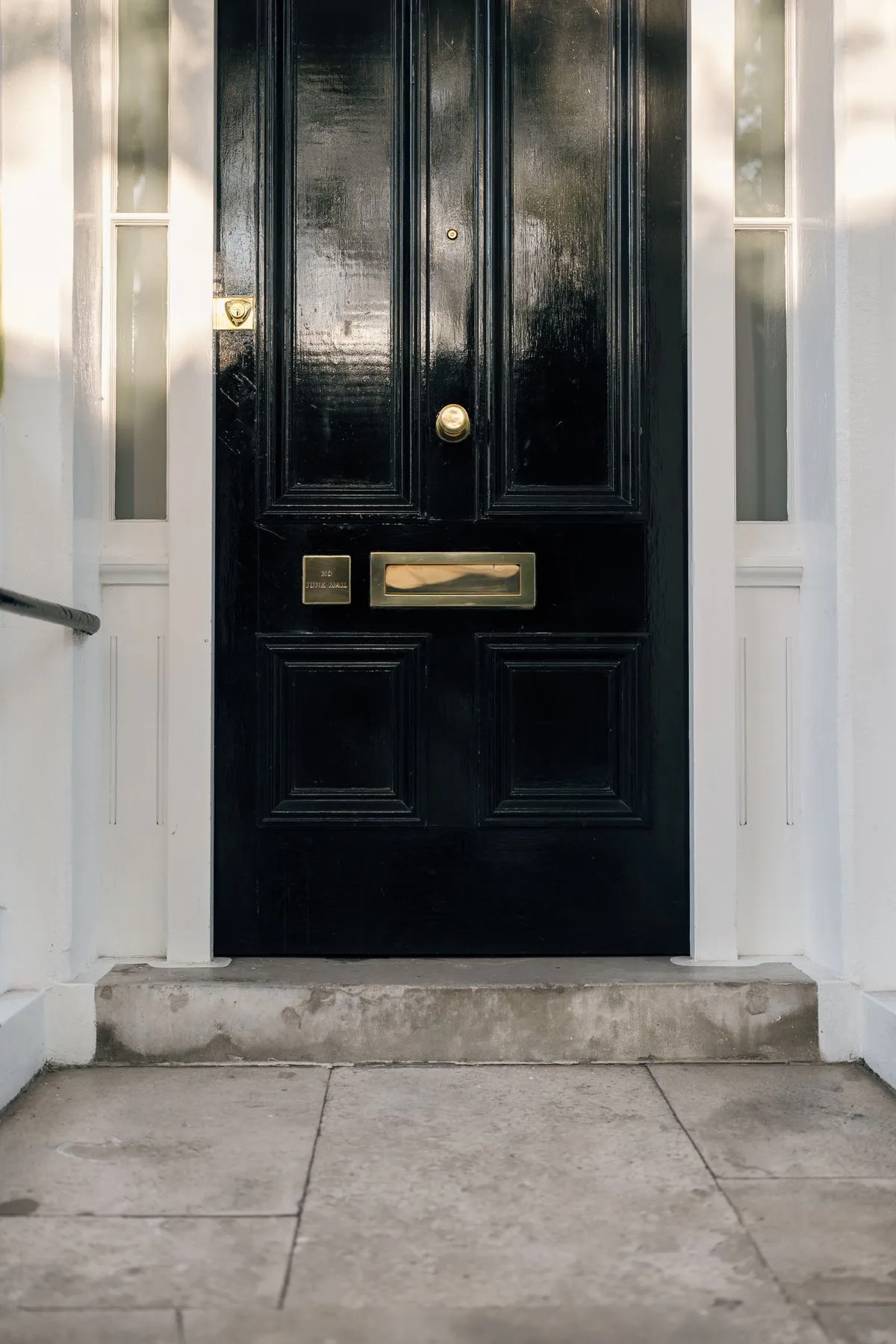
Black, discussed in the FAQ below, ties to the water element and is associated with career and life path rather than being inherently negative — though it’s better suited to north-facing doors than south-facing ones.
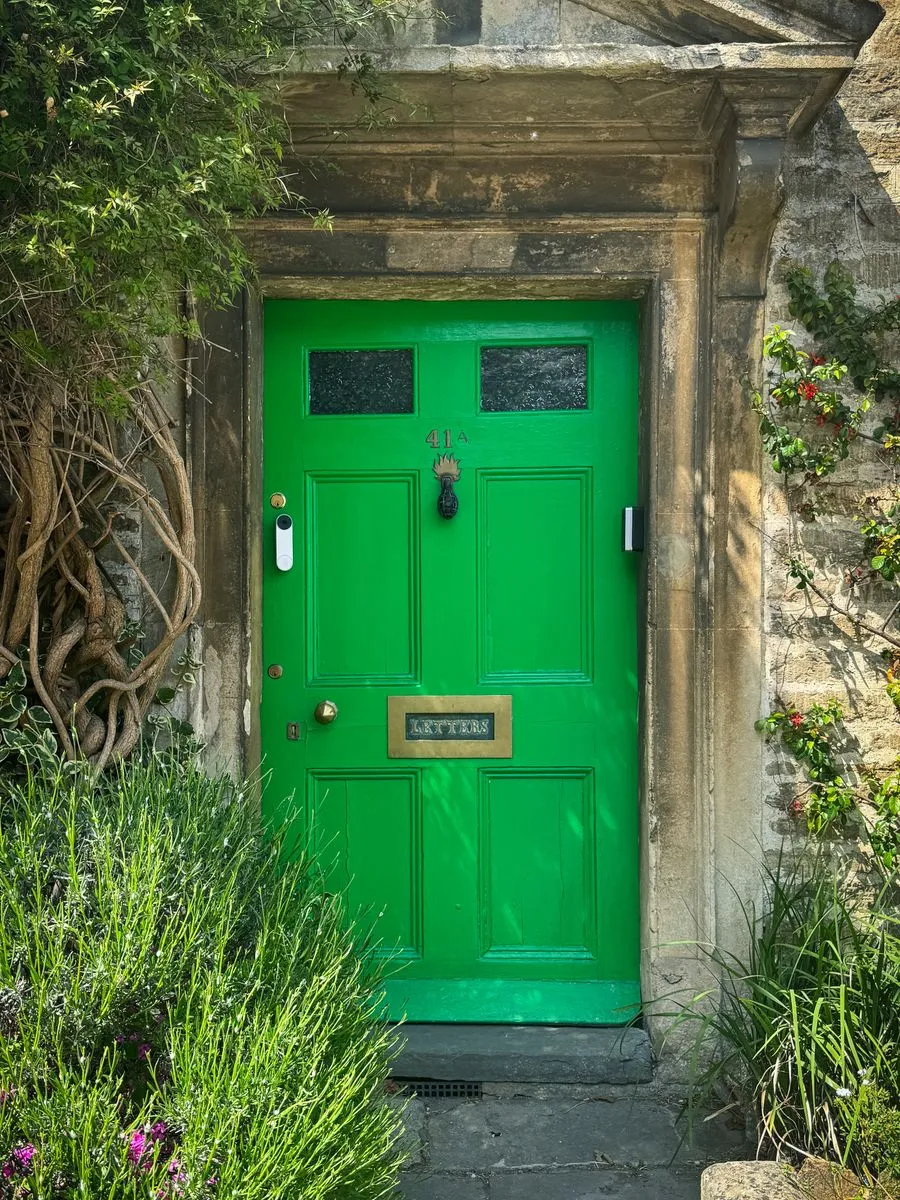
Green connects to growth, health, and new beginnings, tied to the wood element. It works particularly well for homes with east-facing entrances, or homes surrounded by greenery already.
Yellow is tied to the earth element and associated with stability, nourishment, and groundedness — often recommended for households going through a period of change.
Blue, especially deep or navy blue, shares some of the calming, career-oriented associations of black, while reading as slightly softer and more approachable for a main entrance.
White, tied to the metal element, is associated with clarity, precision, and new starts. It suits west and northwest-facing doors particularly well, though it’s a common enough default that its specific meaning often goes unconsidered by homeowners who choose it mainly for its neutrality.
None of these meanings are meant to be applied rigidly. A household with a strong personal connection to a particular color — for reasons entirely outside feng shui — isn’t doing anything wrong by prioritizing that connection over a strict elemental match.
What to Avoid, Generally
A few color choices come up repeatedly as ones to reconsider, regardless of direction:
- Bare, unfinished, or peeling paint. Neglect at the entrance is considered symbolically significant regardless of the color underneath it — a worn door undercuts whatever color meaning it might otherwise carry.
- A color that directly conflicts with your door’s compass element, such as a fire-associated red on a door facing a water-associated north direction. This isn’t treated as catastrophic, but it’s considered a missed opportunity for alignment.
- A color chosen purely for trend reasons without any connection to your own intention for the home. Feng shui guidance works best paired with genuine intention rather than applied as a checklist.
- Ignoring the surrounding facade entirely. A door color that clashes harshly with the rest of the home’s exterior can undercut the sense of harmony feng shui is generally trying to cultivate, even if the color itself is technically well-matched to the door’s direction.
None of these are meant to induce anxiety about a choice you’ve already made. If your current door color doesn’t align with any of this guidance, the fixes below are meant to be additive improvements, not evidence that something has gone wrong.
How to Choose (or Fix) Your Front Door Color
- Determine your door’s compass direction using a phone compass, standing with your back to the door.
- Identify the associated element and color family using the guide above.
- Choose a specific shade within that family that you also genuinely like. Feng shui doesn’t require sacrificing your own taste — there’s usually a wide range of acceptable shades within any element’s color family.
- Repaint, or start smaller. A full repaint is the most direct approach, but a colored wreath, potted plants in that color family, or a new doormat can introduce the same general energy with far less commitment.
- Maintain the door once it’s done. Chipped or faded paint is considered to undercut the intention behind the color choice, so periodic touch-ups matter more than the initial paint job alone.
When You Can’t Change the Color at All
Renters, condo residents, and anyone bound by an HOA color rule often can’t repaint a front door regardless of what feng shui recommends. In these situations, the door itself matters less than what surrounds it: a doormat, a wreath, potted plants, or even a small piece of art visible near the entrance in the recommended color family can introduce a similar symbolic effect without touching the door.
It’s also worth remembering that front door color is one input among many, not a single determining factor for a home’s overall energy. A well-maintained, welcoming entrance in a color you weren’t able to choose still functions far better than a “correct” color applied to a cluttered, neglected doorway.
Lighting matters here too, and it’s almost always within a renter’s control. A well-lit entrance — a working porch light, a clean and swept doormat, healthy plants rather than dying ones — reinforces whatever color is already there, regardless of whether you chose it yourself.
This same principle — that intention and care matter as much as the specific choice — comes up throughout feng shui guidance. If you’re also looking at your bedroom, our guides on rose quartz placement for love and why a mirror shouldn’t face your bed apply the same underlying logic to a different part of the home.
For more ways to align your home with intention, visit the Feng Shui hub.
Frequently Asked Questions
What's the single most recommended front door color in feng shui?
There isn't one universal answer — the right color depends on which direction your door faces, since feng shui ties color recommendations to compass direction and the five elements. That said, red is the most broadly referenced color for main entrances across different schools of practice.
Can I just paint the door trim instead of the whole door?
The full door carries more weight than the trim alone, but painting the trim or adding a colored wreath or mat is a reasonable lower-commitment way to introduce an element's energy without repainting the entire door.
What if I rent and can't repaint my front door at all?
A colored doormat, wreath, or potted plants near the entrance in the relevant color can introduce a similar symbolic effect without any permanent change to the door itself.
Does the color of my door matter if it's not the main entrance I actually use?
In feng shui, the main entrance is defined as the door intended for formal entry, even if you personally use a side or garage door more often day to day. That designated main door is the one color guidance is usually applied to.
Is black really a bad color for a front door?
Not inherently. Black is associated with the water element, tied to career and life path rather than being a universally negative choice. It works well for doors facing north, but is generally discouraged for south-facing entrances, where it can conflict with the fire element associated with that direction.