Where to Place Rose Quartz in Your Bedroom for Love (Feng Shui)
Rose quartz is the feng shui crystal of choice for love, but placement matters. Here's exactly where to put it in your bedroom, and what to avoid.
Rose quartz shows up in nearly every feng shui guide about love for a reason: it’s considered the clearest, most direct crystal association with romantic and self-love energy in the practice. But simply owning a piece of rose quartz doesn’t do much on its own — placement is where the guidance actually gets specific, and it’s the part most articles skip past quickly.
If you already have a piece of rose quartz sitting somewhere in your home, or you’re about to buy one, here’s exactly where it belongs, why that placement matters, and a few common mistakes worth avoiding.
None of this requires a large investment. A small, affordable tumbled stone works just as well symbolically as an expensive polished sphere — feng shui placement is about intention and location, not size or price.
Why Rose Quartz Specifically
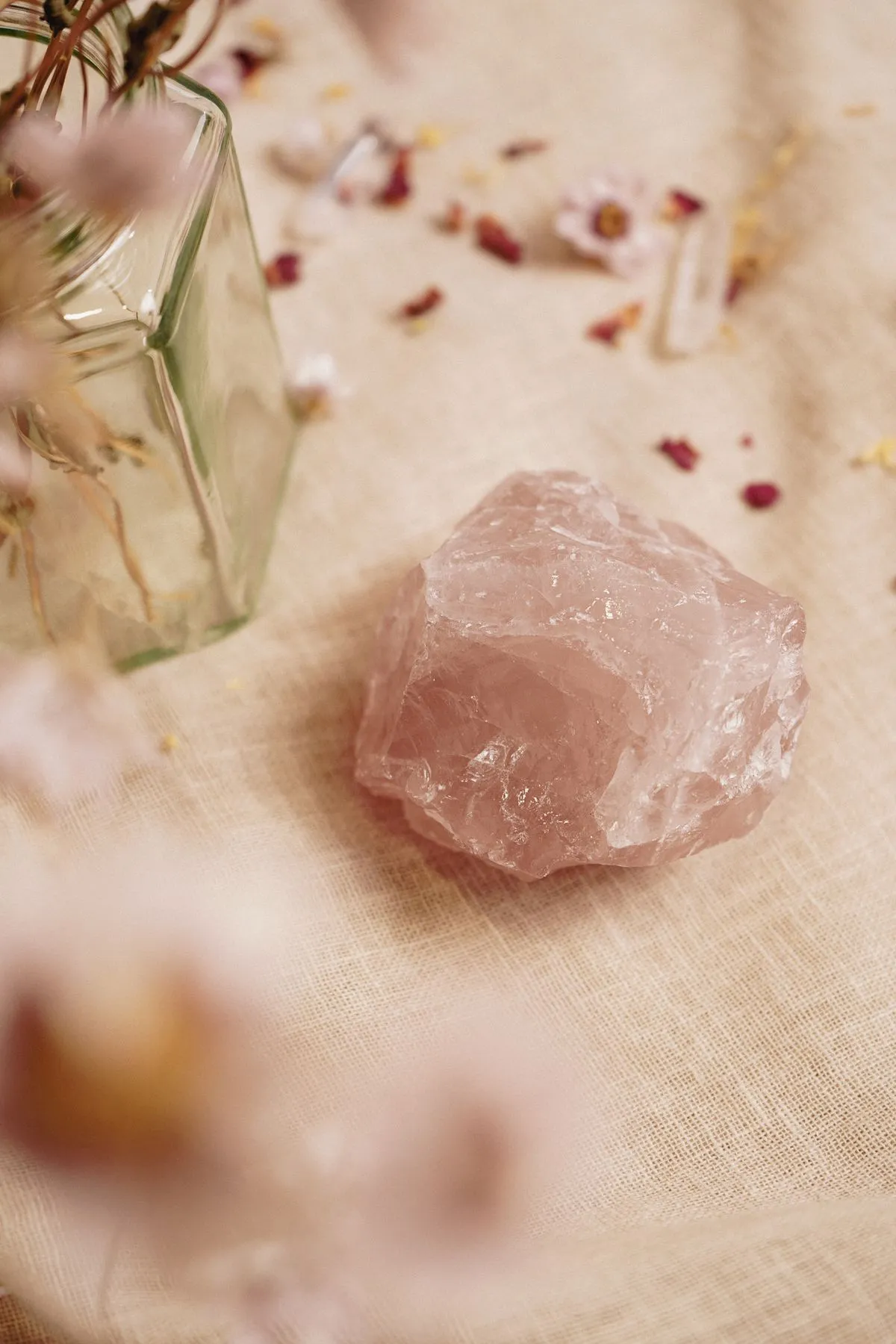
In feng shui, different materials and colors are associated with different kinds of energy, and soft pink is consistently tied to love, compassion, and emotional healing. Rose quartz carries that association more consistently across different schools of feng shui than almost any other crystal — which is part of why it’s become the default recommendation rather than one option among many.
Unlike crystals associated with more assertive energy (citrine for abundance, black tourmaline for protection), rose quartz is considered gentle and cumulative. It isn’t meant to force a dramatic shift; it’s meant to support and soften an environment over time.
That gentleness is often mistaken for weakness, but in feng shui the two aren’t the same thing. A subtle, consistent influence in a space you occupy every day — your bedroom — tends to compound in a way that a single dramatic gesture doesn’t. This is part of why practitioners emphasize placement and consistency over acquiring more or larger stones.
The Relationship Corner: Where It Actually Belongs
The single most important placement concept in feng shui for love is the far right corner of the room, as viewed from the entrance — often called the relationship corner or the “love corner” in bagua map terms. This applies to a bedroom specifically, though the same corner concept extends to a home’s overall floor plan as well.
To find it: stand in your bedroom doorway, looking in. The back right corner of the room, diagonally opposite from where you’re standing, is the relationship corner. This is where rose quartz is considered most effective.
Why the Back Right Corner, Specifically
The logic behind this placement ties to the bagua map, a grid feng shui practitioners overlay onto a room or home to associate each zone with a different area of life. The back right area is consistently mapped to love and relationships across most bagua traditions, which is why crystal, color, and decor guidance for romance repeatedly points there rather than anywhere else in the room.
This same corner concept scales beyond a single room. Many practitioners also map the relationship area for a home’s overall floor plan, using the main entrance as the reference point rather than a bedroom doorway. If you want to go a layer deeper, checking both your bedroom’s relationship corner and your home’s overall one gives a more complete picture — though starting with just the bedroom is more than enough for most people.
How to Place It in That Corner
A few specific approaches work well within the relationship corner:
- On a nightstand, if one sits in that corner. This is the simplest and most common placement — visible, easy to interact with, and naturally positioned near where you spend restful time.
- On a low shelf or dresser top. If there’s no furniture directly in the corner, even a small shelf addition gives the stone a stable, visible home.
- In pairs, for existing relationships. Some practitioners recommend two matching pieces (rather than one) specifically when working with an existing partnership, symbolizing the couple rather than an individual intention.
- Near, but not on, the bed itself. The corner matters more than exact proximity to the mattress — a rose quartz piece works from a nightstand or shelf just as well as one directly beside a pillow.
What to Avoid
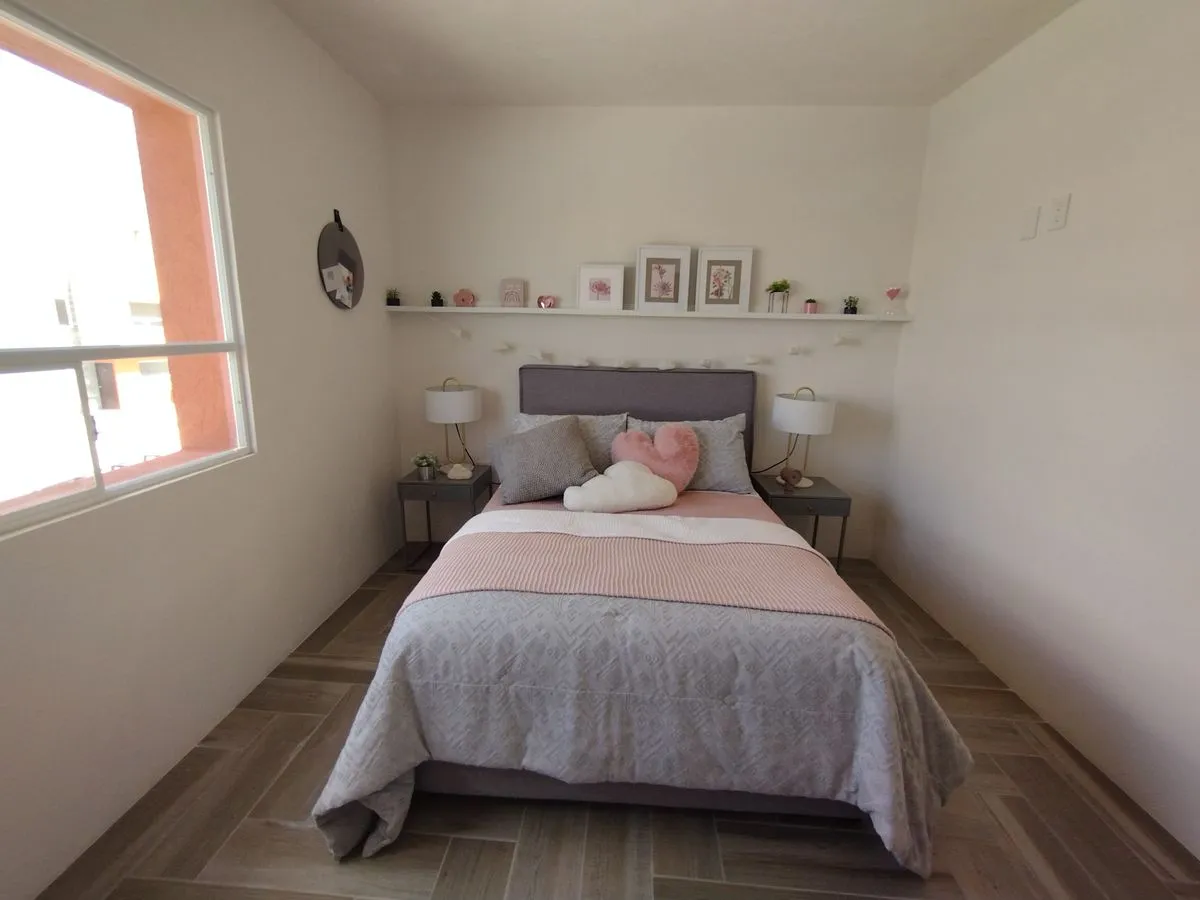
A few common placement mistakes reduce the effectiveness of rose quartz, even when the stone itself is right:
- Placing it in a cluttered corner. Feng shui treats clutter as stagnant energy, which works against whatever a crystal is meant to support. A cluttered relationship corner tends to symbolically cancel out the placement.
- Hiding it in a drawer. Rose quartz is generally considered most effective when visible and part of your everyday environment, not tucked away out of sight.
- Placing it in a bathroom en suite instead of the bedroom proper. Bathrooms are treated differently in feng shui (associated with drainage and dispersal of energy), and are generally not recommended for love-focused placements.
- Overcrowding the corner with too many objects. A single, intentional piece tends to read more clearly than a decorative cluster that buries the stone among unrelated items.
- Pairing it with sharp or broken decor nearby. Cracked frames, broken clocks, or anything visibly damaged sitting near the stone is generally discouraged, since it’s thought to undercut the intention the crystal is meant to support.
- Forgetting about it entirely once it’s placed. A stone that blends so far into the background you no longer notice it stops functioning as an active point of intention — it becomes just another object on a shelf.
If You Don’t Know Your Bagua Map Precisely
Don’t let uncertainty stop you from starting. If you’re not confident you’ve identified the exact relationship corner, placing rose quartz anywhere in the back half of the bedroom, visible and free of clutter, still captures most of the intended effect. Precision helps, but it isn’t a requirement for the placement to matter.
If your bedroom has an unusual layout — an angled wall, an attached closet eating into the corner, or a door placement that makes “back right” ambiguous — use your best approximation and trust it. Feng shui guidance is meant to be applied thoughtfully to real spaces, not treated as a rigid formula that breaks down the moment a room isn’t a perfect rectangle.
A Simple Placement Ritual
Beyond just setting the stone down, a small intentional ritual tends to deepen the placement. None of this needs to feel performative or elaborate — the value is in the attention itself, not in following any particular script exactly.
- Cleanse the stone first. A few minutes of moonlight, running water, or gentle sound (like a singing bowl) is commonly used to clear any energy the stone picked up before reaching you.
- Hold it and set a clear, simple intention. This doesn’t need to be elaborate — a single sentence about what you’re inviting into your life is enough.
- Place it deliberately in the relationship corner. Take a moment while placing it rather than setting it down absentmindedly.
- Dust and re-cleanse it periodically. A neglected, dusty stone is treated the same as clutter — occasional care keeps the placement active rather than forgotten.
- Revisit your intention occasionally. Every few months, briefly reconnect with why you placed it there in the first place.
If your intention shifts over time — from seeking a new relationship to deepening an existing one, for instance — it’s fine to re-cleanse the stone and set a new intention rather than assuming the original one still applies. The placement is meant to grow with you, not lock in a single static wish indefinitely.
When Rose Quartz Isn’t Enough on Its Own
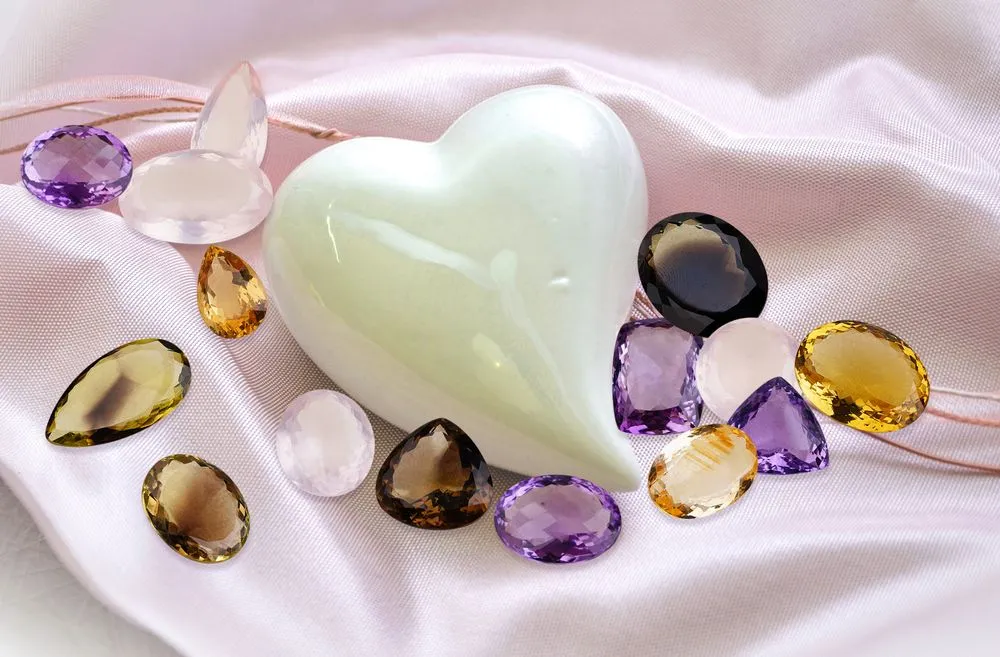
It’s worth being honest about the limits of any placement practice: a crystal in the correct corner of your bedroom supports an emotional environment, but it doesn’t substitute for the actual work of building or repairing a relationship. Feng shui at its best removes small, quiet obstacles and reinforces intention — it isn’t a stand-in for communication, effort, or timing.
This pairs naturally with the emotional groundwork covered in what a soulmate really is — the placement supports the environment, but recognizing and nurturing the connection itself is still the larger part of the work. And if your bedroom is already carrying other unaddressed energy concerns, it’s worth checking whether a mirror facing your bed might be quietly working against the same corner you’re now supporting. Love-supporting energy also starts before you even reach the bedroom — see how your front door color sets the tone for everything that follows it.
For more ways to align your space with love, rest, and intention, visit the Feng Shui hub.
Frequently Asked Questions
Does rose quartz work even if I'm not currently in a relationship?
Yes. Rose quartz is associated with self-love and emotional openness as much as romantic partnership. Many practitioners recommend it especially during single periods, as a way of cultivating the emotional groundwork a healthy relationship depends on.
How many pieces of rose quartz do I need?
One well-placed piece is enough to start. Adding more isn't about strength — it's about intention. A single stone placed thoughtfully tends to work better than several scattered without purpose.
Do I need to cleanse rose quartz before using it?
Many practitioners recommend cleansing a new crystal before its first use — methods like moonlight exposure, sound, or smoke are common. It's a simple practice, but the crystal doesn't stop functioning without it.
Can rose quartz go anywhere else in the home, or just the bedroom?
It can go anywhere, but the bedroom (and specifically the relationship corner) is considered the most direct placement for romantic intention. Living rooms and shared spaces are good secondary spots for a more general, family-oriented version of the same energy.
What if my partner doesn't believe in feng shui or crystals?
Placement doesn't require buy-in from both people to have meaning for you. Many people simply choose a small, unobtrusive stone and a placement that fits naturally into existing decor, so it doesn't need to be a shared practice to be a personal one.