Why the Same Tarot Card Keeps Appearing in Your Readings
Pulling the same tarot card again and again isn't random. Here's what it actually means, and how to tell a real pattern from ordinary coincidence.
You shuffle, you cut the deck, you lay out a new spread for a completely different question — and there it is again. The same card you pulled last week. Or the week before that. It’s disorienting in a way that’s hard to explain to someone who doesn’t read tarot: a 78-card deck, shuffled fresh each time, and yet one card keeps finding its way back to you.
This isn’t your imagination, and it isn’t necessarily bad luck either. A repeating card is one of the more reliable signals in tarot practice — but it’s worth understanding what it actually indicates before assuming it means any one specific thing.
Most experienced readers eventually develop their own private list of cards that seem to “follow” them through certain seasons of life. Learning to notice that pattern, and to read it accurately rather than anxiously, is one of the quieter skills that separates a mature tarot practice from a beginner one.
Why Repetition Isn’t Just Coincidence

With 78 cards in a standard deck, the mathematical odds of any single card reappearing across a handful of readings are genuinely low — low enough that most readers, intuitively, treat repetition as meaningful rather than dismiss it outright. This isn’t unique to tarot; it’s the same instinct behind noticing a repeating number like 1111 or 222 — the pattern-recognition itself is doing real work, drawing your attention toward something before your conscious mind has caught up.
In tarot specifically, a repeating card is generally read as an unresolved theme — something the deck (or, depending on your framework, your own subconscious) is continuing to flag because it hasn’t been fully addressed, understood, or acted on yet.
Whether you read tarot as a genuinely predictive tool or as a structured way of accessing your own intuition, the practical guidance around repetition ends up in the same place. Either the cards are surfacing something real about your circumstances, or your own mind is — through the act of shuffling and drawing — repeatedly steering itself back toward whatever it hasn’t finished processing. Both framings point you toward paying attention rather than dismissing the pattern.
What a Repeating Card Usually Means
A few interpretations come up consistently across different tarot traditions when a card keeps reappearing:
- An unresolved question. The card is tied to a situation you haven’t actually settled, even if you’ve mentally moved past it.
- A theme you’re avoiding. Repetition sometimes points to something you’ve been sidestepping rather than confronting directly.
- A lesson still in progress. Rather than a single event, the card can represent an ongoing process you’re partway through rather than finished with.
- Confirmation, not new information. Sometimes a card repeats simply to reinforce a message you’ve already received once, because it didn’t fully land the first time.
Does the Specific Card Matter More Than the Repetition Itself?
Both matter, but in different ways. The specific card tells you what theme is active — love, change, conflict, growth. The fact that it’s repeating tells you how urgently that theme wants your attention. A single pull of a card is information; a repeating pull is emphasis.
It helps to resist the urge to over-intellectualize this distinction in the moment. In practice, most readers find the two blend together naturally the more familiar they become with a card — the specific meaning and the sense of urgency arrive almost simultaneously rather than as two separate steps of analysis.
How to Tell a Real Pattern From Ordinary Chance
Not every recurrence is significant. A few distinctions help separate a genuine pattern from statistical noise:
- Spacing matters. A card appearing twice in the same sitting, across two spreads back to back, is far less notable than the same card reappearing across readings spread over days or weeks.
- Context matters. If the card keeps showing up specifically when you ask about the same area of life (relationships, work, a particular decision), that’s a stronger signal than random reappearance across totally unrelated questions.
- Your reaction matters. A card that makes you sit up, or that you find yourself thinking about hours later, is a more reliable signal than one you barely register.
- Frequency relative to the deck matters. One card appearing three times across ten readings is far more notable than it appearing twice across a hundred.
- The company it keeps matters, too. A repeating card that consistently lands alongside the same one or two other cards is telling a more specific, layered story than one that turns up in otherwise unrelated spreads.
Taken together, these markers turn “this feels like a pattern” into something closer to an actual, evaluable signal — which matters, since intuition alone can be swayed by whatever reading happened most recently rather than reflecting the fuller picture.
A Simple Way to Track It
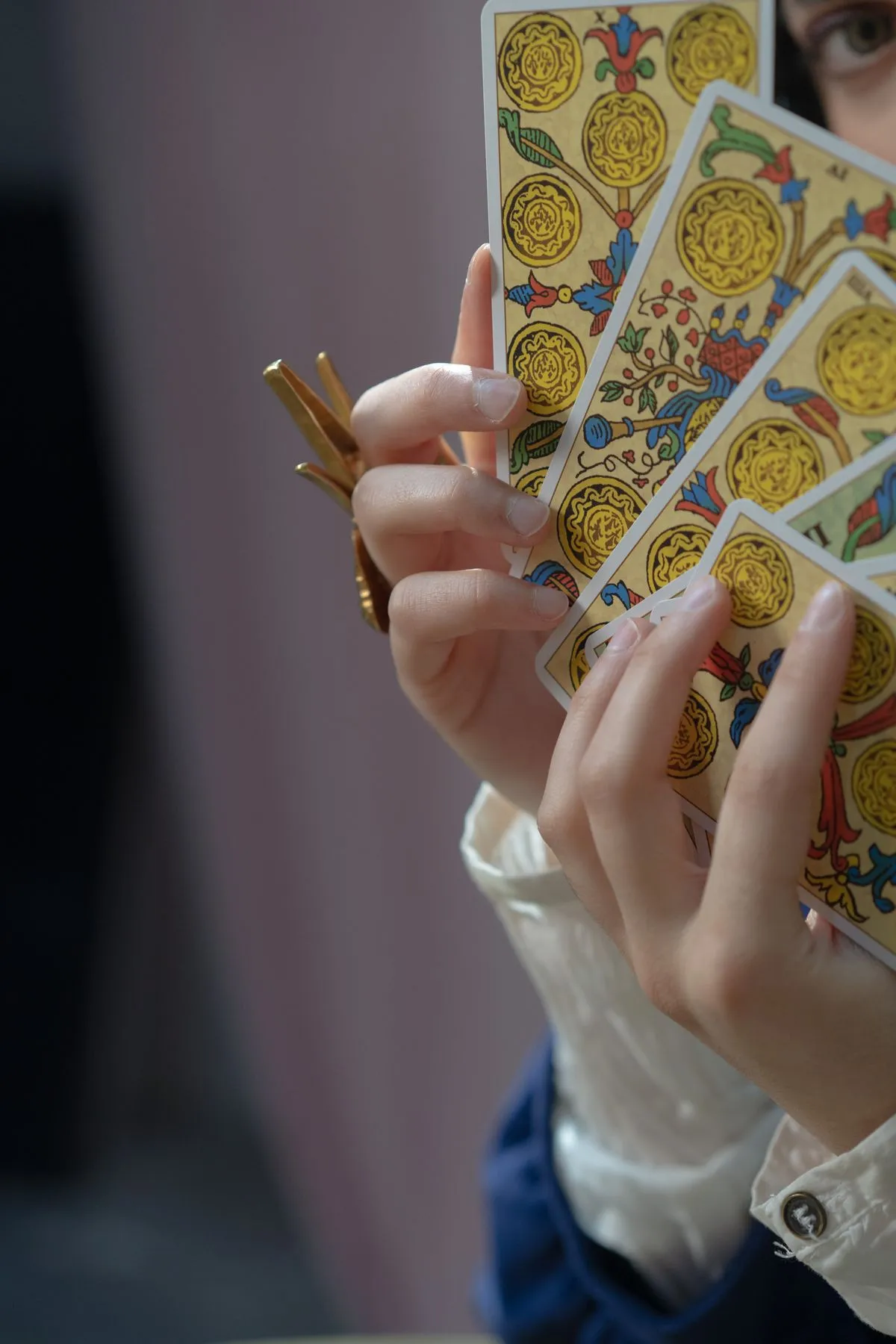
Rather than relying on memory alone, a lightweight tracking habit makes real patterns much easier to spot.
- Keep a running log. After each reading, jot down the date, the question, and every card pulled — even briefly.
- Note the card’s position and orientation. Where it landed in the spread, and whether it was upright or reversed, adds useful texture to the pattern over time.
- Review your log periodically. Once a month or so, skim back through and look for any card appearing more than expected.
- Sit with the theme, not just the card name. When you spot a repeat, ask what broader theme connects the readings it appeared in, rather than treating the card in isolation each time.
- Let the pattern resolve on its own timeline. Some repeating cards settle after a single deep reflection; others take months of showing up before their message becomes clear.
When the Same Card Keeps Showing Up for a Difficult Reason
It’s worth being honest that not every repeating card is a gentle nudge. Some cards repeat specifically because they carry a theme you’d rather not look at directly — a card associated with change when you’re resisting it, or with letting go when you’re holding on tightly.

In those cases, the repetition isn’t punishment or a bad omen — it’s closer to an alarm that keeps going off because the underlying issue hasn’t been addressed. The message tends to stop repeating once it’s actually been heard, not once you’ve found a way to reframe it as something more comfortable.
It’s worth noticing, too, if your instinct is to reshuffle immediately whenever a difficult card appears, hoping for something easier. That impulse is understandable, but it tends to be exactly the pattern that keeps a difficult card in rotation longer than it needs to be. Sitting with an uncomfortable pull, rather than shuffling past it, is usually what actually resolves the repetition.
When It’s Genuinely Just Chance
With 78 cards and enough readings over a lifetime, some repetition is simply mathematically inevitable — not every recurrence carries a hidden message, and treating literally every repeat as profound can turn a grounding practice into an anxious one.
This distinction matters most for people who read frequently. A daily single-card practice, for instance, will naturally produce far more coincidental repeats over a year than an occasional full-spread reading done once a month — the raw frequency of your practice should factor into how much weight you give any individual recurrence.
If a card reappears without any of the markers described above — no unusual emotional charge, no consistent context, no sense of it lingering afterward — it’s reasonable to let it pass as ordinary shuffling rather than search for meaning that isn’t there. Trusting that distinction is itself part of developing a mature reading practice.
Over time, most readers find this judgment gets easier rather than harder. The same intuition that eventually makes card meanings feel instinctive rather than memorized also gets better at distinguishing a meaningful repeat from background noise — it just takes enough readings to build that sense.
This same instinct — learning which signals genuinely deserve your attention and which don’t — comes up throughout this site’s approach to signs and patterns, whether it’s dreaming about someone before you meet them or noticing a number that won’t stop appearing. Tarot repetition is simply one more variation on the same underlying skill.
This kind of pattern recognition also builds fastest through a daily single-card practice, and it applies just as much to intense cards like The Tower, Death, and The Devil as it does to any other repeating card.
For more ways to build a grounded, intuitive tarot practice, visit the Tarot hub.
Frequently Asked Questions
How many times does a card need to repeat before it actually means something?
There's no fixed number, but three or more appearances across separate readings, spaced out over time, is generally treated as more significant than two closely spaced pulls, which could still be ordinary chance.
Does it matter if the card appears upright versus reversed each time?
It's worth noting, but not essential. A card repeating in different orientations still carries its core theme; the shift between upright and reversed usually adds nuance rather than canceling the pattern out.
What if the repeating card feels negative or scary?
A repeating card that feels difficult is often the one most worth sitting with rather than avoiding. Cards that feel unwelcome tend to repeat specifically because their message hasn't been fully absorbed yet.
Can a repeating card be about someone else, not me?
Yes, especially if your readings frequently involve a specific relationship or situation. A repeating card can reflect a pattern in that dynamic as much as a pattern within you personally.
Should I stop pulling cards until the pattern makes sense?
Not necessarily. Continuing to read while holding the question loosely tends to work better than pausing entirely — the pattern often clarifies itself through the readings that follow, not through stepping away from the practice.